Clinic locations

Implantology
Restoration of Dental Function and Aesthetics

What is implantology?
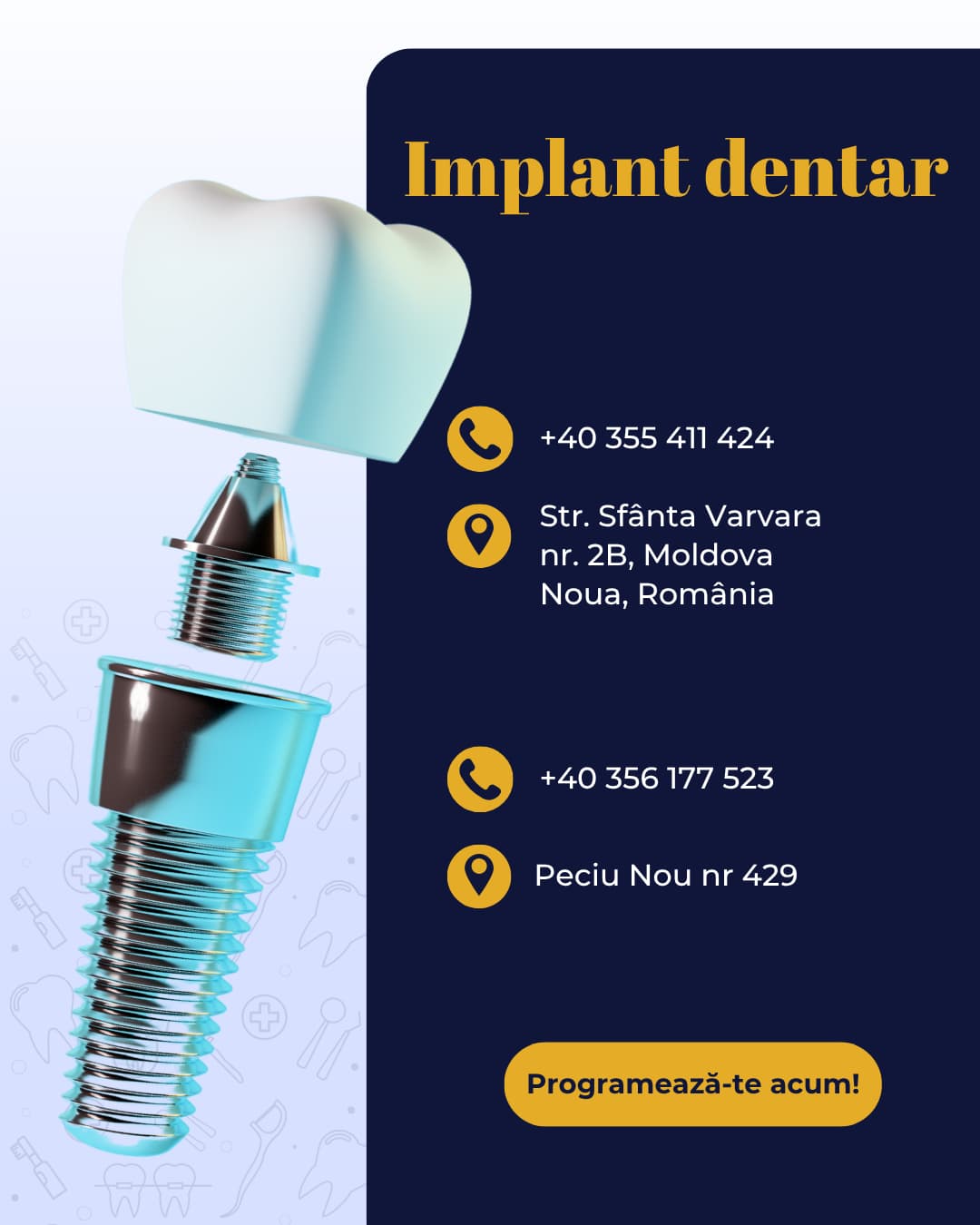
Dental implantology is a modern branch of dentistry that deals with the replacement of missing teeth through dental implants. A dental implant is a medical device made of titanium or zirconium, which is integrated into the maxillary or mandibular bone, acting as an artificial root for the replaced tooth. Dental implants are considered the most advanced and effective solution for replacing missing teeth, providing stability and functionality similar to natural teeth.
These implants can support one or more dental crowns, dental bridges, or even complete dentures. Compared to traditional solutions, such as removable dentures or dental bridges, implants offer superior stability and are much more comfortable for the patient, helping to preserve bone health and prevent bone atrophy that occurs with tooth loss.
What does implantology do?
Implantology is dedicated to the functional and aesthetic rehabilitation of the oral cavity by replacing missing teeth. Essentially, it deals with:
- 1. Planning and insertion of dental implants: Implantologists perform a detailed evaluation of the patient's bone structure to determine if they are a good candidate for implants. The insertion procedure involves the surgical placement of a titanium or zirconium screw into the maxillary or mandibular bone, where it will gradually fuse with the bone through a process called osseointegration.
- 2. Prosthetic restorations: Once the implant has integrated into the bone, dental crowns or other prosthetic devices are installed to complete the functional and aesthetic restoration of the patient's teeth. This step is usually performed by a prosthetic specialist.
- 3. Maintenance and monitoring of dental implants: The long-term success of implants depends on their proper maintenance, through regular check-ups and rigorous oral hygiene. Implantologists collaborate with patients to ensure the longevity of the implants and to prevent post-surgical complications.
Causes of tooth loss and diagnosis in implantology
Tooth loss can be caused by a variety of factors, including:
- 1. Periodontal disease (periodontitis): This is one of the main causes of tooth loss in adults. Periodontitis is a chronic infection of the gums and supporting structures of the teeth. In advanced stages, this condition leads to the destruction of the alveolar bone and dental ligaments, causing mobility and,ultimately, tooth loss.
- 2. Severe tooth decay: Untreated tooth decay can progress to damage the dental pulp and roots, which may require tooth extraction.
- 3. Dental trauma: Accidents that cause severe tooth fractures or tooth dislocation may require extractions. Dental implants are an excellent solution in such cases, providing a permanent solution to replace lost teeth.
- 4. Failure of previous dental treatments: Some dental procedures, such as root canals or dental repairs, can fail for various reasons (recurrent infections, tooth fractures), and in these situations, tooth extraction and implant placement become the optimal solution.
- 5. Aging and Wear: As we age, teeth become more susceptible to wear and tear and dental disease, which can lead to their loss. Dental implants are a durable solution for elderly patients who have lost their natural teeth.
- 6. Congenital anomalies: In some cases, teeth do not develop correctly or at all due to genetic conditions. Implantology can provide an effective solution for patients suffering from such anomalies.
Symptoms that indicate the need for dental implants
Symptoms that may suggest the need for a dental implant are usually related to problems related to the loss of one or more teeth and their consequences on the oral cavity. These symptoms include:
- 1. Chewing difficulties: The absence of one or more teeth can make it difficult to chew food effectively, affecting the patient's digestion and quality of life.
- 2. Compromised dental aesthetics: Missing teeth, especially in the front area, can significantly affect the appearance of the smile, influencing the patient's self-confidence.
- 3. Changes in facial structure: As the jawbone resorbs after the loss of a tooth, the face may begin to look older and suffer changes in shape and volume.
- 4. Tooth migration: Teeth neighboring the missing ones may begin to move into the empty spaces, affecting the overall alignment of the teeth and creating occlusal problems.
- 5. Loss of bone volume: After the loss of a tooth, the jawbone begins to atrophy because it no longer receives the necessary stimulus from the tooth root. This bone loss can affect the stability of other teeth and create difficulties in future implant placement, if not treated in time.
Diagnosis in implantology
The diagnostic process in implantology includes a detailed assessment of the patient's oral health, as well as the structure and density of the bone available for the implant. Here are the main steps in the diagnosis required for the placement of dental implants:
- 1. Clinical examination: The dentist or implantologist performs a visual assessment of the oral cavity to identify any signs of infection, inflammation, or other problems that could influence the success of the implant.
- 2. Dental X-rays: Panoramic X-rays or 3D digital X-rays (CBCT) are used to evaluate the bone structure and determine the size, shape, and density of the maxillary or mandibular bone. These images help identify important anatomical structures, such as nerves or sinuses, and provide the doctor with essential information for precise planning of the intervention.
- 3. Digital or physical model of the dental arches: A digital or physical model of the patient's teeth and gums is often used to evaluate the future positioning of the implant and to plan prosthetic restorations.
- 4. Assessment of general health: Another important aspect in diagnosis is the assessment of the patient's general health. Conditions such as uncontrolled diabetes, smoking, or cardiovascular disease can affect the success of the implant. Also, certain medications or treatments, such as bisphosphonates, can influence the bone's ability to heal and integrate with the implant.
After this thorough evaluation, the implantologist will determine if the patient is a suitable candidate for dental implants and will develop a personalized treatment plan that meets their specific needs.
Treatment methods used in implantology
Dental implantology has evolved significantly in recent decades, offering a wide range of personalized solutions for patients with missing teeth. Depending on the patient's needs, there are several types and treatment methods that can be used to restore the functionality and aesthetics of the oral cavity.
1. Scaling and root planing
Single-tooth implants are the ideal solution for patients who have lost a single tooth and want to replace that tooth without affecting the adjacent teeth. In this type of treatment, a titanium or zirconium implant is placed in the maxillary or mandibular bone in place of the root of the lost tooth. Once the implant is fully integrated, a custom-made dental crown is secured over it. The advantages of this type of implant include:
- ● Preservation of the integrity of natural teeth: Compared to traditional dental bridges, which require grinding of neighboring teeth to be anchored, single-tooth implants allow for the preservation of healthy teeth intact.
- ● Complete restoration of masticatory function: Single-tooth implants offer the same stability and functionality as natural teeth, allowing the patient to chew and speak without discomfort.
- ● Prevention of bone resorption: The insertion of a dental implant stimulates the jawbone, preventing the loss of volume that naturally occurs after the loss of a tooth.
Multiple implants and implant bridges
When several adjacent teeth are missing, multiple implants can be used to support a dental bridge. Instead of needing an implant for each missing tooth, the implantologist can strategically place two or more implants to support a bridge that replaces multiple teeth at once. Advantages of implant-supported bridges:
- ● Restoration of a full arch: Implant-supported bridges allow for the replacement of multiple missing teeth in a single procedure, which saves time and reduces patient discomfort.
- ● Excellent aesthetic and functional results: Dental crowns and bridges are made of aesthetic materials, such as ceramic or zirconium, that perfectly mimic the appearance of natural teeth.
All-on-4 and All-on-6 Implants
All-on-4 and All-on-6 Implants are innovative solutions for patients who have lost all teeth in a dental arch (maxillary or mandibular) and want a fixed and stable solution, without resorting to removable prostheses. This technology involves the placement of four or six strategic implants in the maxillary or mandibular bone, which support a fixed prosthesis that replaces all the teeth in the arch.Benefits of these methods:
- ● Rapid rehabilitation: In many cases, the fixed prosthesis can be applied immediately after the insertion of the implants, providing the patient with a complete restoration on the same day.
- ● Reduced need for bone grafts: In the case of All-on-4 implants, the insertion angle of the implants is optimized to utilize the existing bone, even when there is significant bone resorption. This reduces the need for additional interventions, such as bone grafts.
- ● Stability and comfort: The prosthesis fixed on implants is much more stable than traditional removable prostheses, which offers the patient more safety and comfort.
Bone grafts and sinus lift
For dental implants to be viable, it is essential that the patient has sufficient bone volume in the maxilla or mandible. In cases where bone has been resorbed, either due to periodontitis or long-term tooth loss, a bone grafting procedure may be necessary to provide the necessary support for the implant.
- ● Bone grafting involves the addition of bone material, either autologous (taken from another part of the patient's body) or synthetic, to stimulate bone regeneration and provide stable support for the implant.
- ● Sinus lift is a procedure used for patients who need implants in the upper molar area but who have an insufficient amount of bone due to the proximity of the maxillary sinus. The procedure involves lifting the sinus membrane and adding bone to this area to allow for the insertion of dental implants.
Computer technology and surgical guidance
With technological advances in the field of implantology, many clinics are using digital technology to plan and guide the insertion of implants with millimeter precision. Computer-aided surgical guidance uses 3D imaging (CBCT) and digital scans to create a detailed model of the patient's jaw, allowing the implantologist to accurately plan the location, angle, and depth of implant insertion.Guide benefits of surgical age include:
- ● Increased precision: Implant insertion becomes safer and more precise, reducing the risk of complications.
- ● Reduced operating time: Interventions are performed faster, with minimal discomfort for the patient.
- ● Predictable results: Advanced technology allows implantologists to achieve optimal aesthetic and functional results.
Maintenance of dental implants
Dental implants require proper maintenance to ensure their longevity and prevent complications. Maintaining your implants involves:
- ● Rigorous oral hygiene: Implant patients should brush their teeth twice a day and use dental floss or a mouthwash to remove plaque from around the implants.
- ● Regular dental check-ups: Regular visits to the dentist are essential to monitor the condition of your implants and prevent problems such as peri-implantitis.
- ● Avoid bad habits: Smoking and bruxism (teeth grinding) can negatively affect the long-term success of dental implants.
Dental implantology is an advanced and effective solution for patients suffering from tooth loss, offering them the opportunity to restore their smile, oral functionality and self-confidence. Whether it is a single missing tooth or an entire dental arch, dental implants are a durable and aesthetic method of replacing lost teeth, with long-lasting results.
With a well-structured treatment plan, advanced diagnostics and the use of state-of-the-art technologies, implantologists can achieve excellent results that significantly improve the quality of life of patients.
In addition, maintaining proper oral hygiene and performing regular check-ups will ensure the long-term success of dental implants, allowing patients to enjoy fully functional and aesthetic teeth for many years.
Frequently Asked Questions (FAQ) about Implantology
-
What is a dental implant and how does it work?
A dental implant is an artificial root, made of titanium or zirconium, inserted into the maxillary or mandibular bone. The implant fuses with the bone through the osseointegration process, providing a solid base for the installation of a dental crown, bridge or prosthesis. It functions like a natural tooth, restoring both the functionality and aesthetics of the smile..
-
What are the advantages of dental implants over other methods of tooth replacement?
Dental implants offer a number of advantages over dental bridges or removable dentures, including increased stability, prevention of bone resorption, complete restoration of masticatory functionality and natural aesthetics. Implants also do not require grinding of neighboring teeth, preserving their integrity.
-
Who is a suitable candidate for dental implants?
An ideal candidate for dental implants is a person with good overall health, who has sufficient bone volume in the jaw or mandible to support the implant. However, even patients with significant bone loss can benefit from additional procedures, such as bone grafting or sinus lift, to become eligible for implants.
-
How long does the dental implant process take?
The total duration of the dental implant process can vary between 3 and 6 months, depending on the complexity of the case. This time includes the bone integration phase, which takes approximately 3-4 months, followed by the fitting of the dental crown or prosthesis. In some cases, All-on-4 solutions can restore a smile in a single day.
-
What is the lifespan of a dental implant?
Dental implants are designed to be a long-term solution, with a lifespan of over 20 years, and in some cases, they can even last a lifetime. The longevity of implants depends on factors such as the patient's oral hygiene, regular check-ups with the dentist, and avoiding harmful habits such as smoking.
-
What complications can occur with dental implants?
Although the success rate of dental implants is very high (over 95%), complications can occur such as implant site infections, peri-implantitis, implant rejection, or damage to the nerves around the implant. Good oral hygiene and regular visits to the dentist can prevent these complications.
-
How much does a dental implant cost?
The cost of a dental implant varies depending on several factors, including the material used, the complexity of the case, and geographic location. Dental implants are generally a larger investment than other methods of tooth replacement, but they offer a long-lasting solution and numerous benefits for oral health and aesthetics.