Clinic locations

Dental Surgery
A Complete Guide to Your Oral Health

What is dental surgery?
Dental surgery is a branch of dentistry that involves surgical interventions on the teeth, jawbones and adjacent tissues to treat conditions that cannot be resolved by conservative methods. These interventions are performed by dentists specializing in oral and maxillofacial surgery, who have advanced training in dental surgical techniques.
Dental surgery can be divided into several sub-branches, including:
- ● Oral surgery: It deals with surgical procedures involving the teeth and adjacent structures of the oral cavity. The most common procedures include tooth extractions (including wisdom teeth), periodontal surgery, and biopsies for suspicious lesions.
- ● Maxillofacial Surgery: It is a specialty that treats more complex conditions of the face, jaws, and teeth, such as trauma, congenital deformities, tumors, or severe infections that require surgery.
What does dental surgery do?
Dental surgery plays a key role in the treatment and prevention of dental and jaw problems that cannot be managed by routine dental methods. The main areas in which dental surgery is applied include:
- 1. Complex Dental Extractions: Although simple tooth extractions can be performed by most general dentists, some cases require specialized surgical interventions. These include the extraction of wisdom teeth (wisdom molars), teeth affected by severe infections, or teeth that have not erupted properly and have become trapped in the bone.
- 2. Dental Implantology: One of the greatest advances in modern dentistry is the dental implant, a surgical procedure in which a titanium screw is inserted into the jawbone to replace the root of a lost tooth. Dental implants offer a long-term solution for restoring the functionality and aesthetics of a smile.
- 3. Periodontal Surgery: Gum diseases, such as periodontitis, can severely damage the supporting tissues of teeth, leading to tooth loss. Periodontal surgery is used to treat these conditions by removing infected tissues and regenerating the gums and jawbone.
- 4. Orthognathic surgery: This involves surgical interventions on the jaws to correct severe malocclusions (bite dysfunctions) that cannot be treated with orthodontics alone. Orthognathic surgery restores facial balance and jaw function.
- 5. Oral biopsies and removal of lesions: In the case of suspicious lesions in the oral cavity (such as nodules, cysts, or tumors), oral surgeons may perform biopsies to remove tissue and send it for analysis. These interventions are essential for the early diagnosis of malignant or premalignant conditions.
Causes and symptoms of conditions requiring dental surgery
Dental surgery is indicated in various situations, and the causes that determine the need for surgical interventions can vary from simple dental infections to congenital deformities of the jaws. Below are detailed the main causes and symptoms that may require dental surgery.
Common causes of surgical dental problems
- 1. Advanced dental infections: When untreated dental caries reaches the dental pulp and causes infection, it can develop into a dental abscess. If the infection is severe and affects the bone or adjacent tissues, tooth extraction or drainage of the abscess may become necessary.
- 2. Impacted wisdom teeth: Wisdom teeth (or wisdom teeth) are teeth that do not have enough space to erupt properly and remain partially impacted or completely embedded in the bone. These teeth can cause pain, recurrent infections, or push other teeth, affecting the alignment of the teeth. Dental surgery is required to remove them.
- 3. Advanced periodontal disease: In severe cases of periodontitis, the tissues that support the teeth are destroyed, and the gums and jawbone may be affected. Periodontal surgery is required to clean out the infected tissues and regenerate the tooth-supporting structures.
- 4. Dental and jaw trauma: Injuries involving the teeth or jaws, such as tooth fractures or jaw dislocations, may require surgery to restore the functionality and aesthetics of the smile.
- 5. Tooth Loss and Bone Resorption: After tooth loss, the jawbone tends to resorb (bone retraction), making it difficult to insert a dental implant. In such cases, bone augmentation surgery may be necessary to rebuild bone volume.
- 6. Severe Malocclusions: Cases where the jaws are not properly aligned (such as prognathism or retrognathism) can affect chewing and facial aesthetics. Orthognathic surgery is used to reposition the jaws into the correct position.
- 7. Suspicious Oral Lesions: Cysts, nodules, or other abnormal lesions discovered in the oral cavity may require a biopsy or surgical excision for detailed evaluation. In cases of oral cancer or other malignancies, surgery is essential to completely remove the affected tissue.
Symptoms that indicate the need for dental surgery
- 1. Persistent tooth pain: Intense, persistent pain in a tooth may indicate the presence of an advanced dental infection that cannot be treated with antibiotics or root canal treatments alone. If the infection has spread to the bone or surrounding tissues, surgery may be necessary to prevent complications.
- 2. Inflammation and swelling of the gums: Swollen, tender, or bleeding gums may signal an advanced periodontal infection. In severe cases, when conventional treatments are not enough, periodontal surgery may be necessary to restore gum health.
- 3. Difficulty chewing or opening the mouth: If a patient has difficulty opening the mouth, pain when chewing, or persistent discomfort in the jaw, these symptoms may signal a deeper problem that requires surgical evaluation.
- 4. Dental abscess or fistula: The appearance of an abscess in the gum, which may manifest as painful swelling and the presence of pus, indicates a severe infection. Surgery may be necessary to drain the abscess and remove the source of infection, usually by extracting the affected tooth or surgically draining it.
- 5. Impacted or incompletely erupted teeth: If a tooth does not erupt properly or remains stuck under the gum (impacted), it can cause pain and recurring infections. Wisdom teeth are the most common impacted teeth, but any tooth that has not erupted properly may require surgical extraction.
- 6. Excessive bleeding gums: In advanced cases of periodontal disease, the gums may bleed frequently and profusely. If nonsurgical treatments do not improve the situation, surgery may be necessary to clean and rebuild the affected tissues.
- 7. Complicated dental fractures: Dental fractures that reach the root of the tooth or affect surrounding structures may require complex surgical interventions to restore the functionality and aesthetics of the tooth or, in extreme cases, to replace the tooth with a dental implant.
How is the diagnosis made in dental surgery?
Correct diagnosis and planning of effective surgical treatment requires a multidisciplinary approach, using advanced techniques and technologies to accurately assess the patient's condition. Here are the main steps involved in the diagnostic process:
- 1. Clinical examination: The clinical examination performed by the dentist is the first step in diagnosing problems that may require dental surgery. He will check the general condition of the oral cavity, evaluate the teeth, gums and jawbone, and discuss with the patient the symptoms and discomforts experienced.
- 2. Dental X-rays: X-rays provide a detailed image of the internal structures of the teeth, roots and jawbone. They are essential for identifying impacted teeth, dental fractures, periapical infections and bone resorption. Panoramic radiographs are often used to assess the overall structure of the jaws and the position of the teeth.
- 3. CBCT (Cone Beam Computed Tomography): For complex cases, a computed tomography (CBCT) scan can provide detailed three-dimensional images of the teeth and maxillofacial structures. This is particularly useful in implantology, orthognathic surgery, or for evaluating impacted teeth.
- 4. Functional tests: If the patient has problems chewing or opening the mouth, the doctor may perform functional tests to assess the mobility of the jaws and teeth. They will also assess the bite (occlusion) and the position of the jaws.
- 5. Interdisciplinary consultation: In certain cases, such as those involving severe trauma, tumors or major malocclusions, collaboration between several specialists is necessary: orthodontists, maxillofacial surgeons, periodontists and implantologists. This ensures a complete and personalized treatment plan for the patient.
- 6. Biopsy: If there are suspicious lesions in the oral cavity (such as nodules, cysts or other tissue changes), a biopsy can be performed to take a tissue sample and send it to the laboratory for histopathological analysis. This is essential for diagnosing malignant or premalignant conditions.
Based on these investigations, the orthodontist can establish a clear diagnosis and a personalized treatment plan for each patient. Correct diagnosis is crucial for choosing the treatment method and achieving the best results.
Treatment methods used in dental surgery
Modern orthodontics offers a wide range of methods and devices for correcting dental malpositions and malocclusions. Treatments are tailored to each patient depending on the severity of the problem, age, and aesthetic and functional goals. The most common orthodontic treatment methods are detailed below.
Fixed orthodontic appliances
Dental surgery includes a wide range of procedures ranging from simple interventions, such as tooth extractions, to complex procedures, such as bone reconstructions and orthognathic surgery. Each treatment method is tailored to the specific needs of the patient and is performed by a specialized dentist.
Simple and complex tooth extractions
Tooth extraction is one of the most common surgical procedures in dentistry and can be classified into two main categories:
- ● Simple extractions: These are performed when a tooth is visible in the oral cavity and can be easily removed using dental forceps. Simple extractions are usually performed under local anesthesia and do not require additional surgery.
- ● Complex (surgical) extractions: If the tooth is impacted (buried in the bone) or severely damaged, a surgical extraction may be necessary. This involves making an incision in the gum to access the tooth and remove it. In some cases, the tooth must be sectioned into several parts in order to be completely extracted. Impacted wisdom teeth are the most commonly removed through surgery.
Surgical tooth extractions are indicated in the following cases:
Removable orthodontic appliances are removable devices that can be removed by the patient to eat, drink, and clean their teeth. They are more often used in children and adolescents, because their jaws are still growing, and removable appliances can guide proper development.
Types of removable orthodontic appliances:
- ● Impacted or partially erupted wisdom teeth that cause pain, infection, or affect the alignment of other teeth.
- ● Severely fractured or damaged teeth that cannot be repaired by other methods (such as root canals or dental crowns).
- ● Teeth affected by severe infections, abscesses, or periapical cysts.
After a tooth is extracted, it is essential that the patient follow the postoperative instructions to prevent complications and promote healing.
Implantology dental
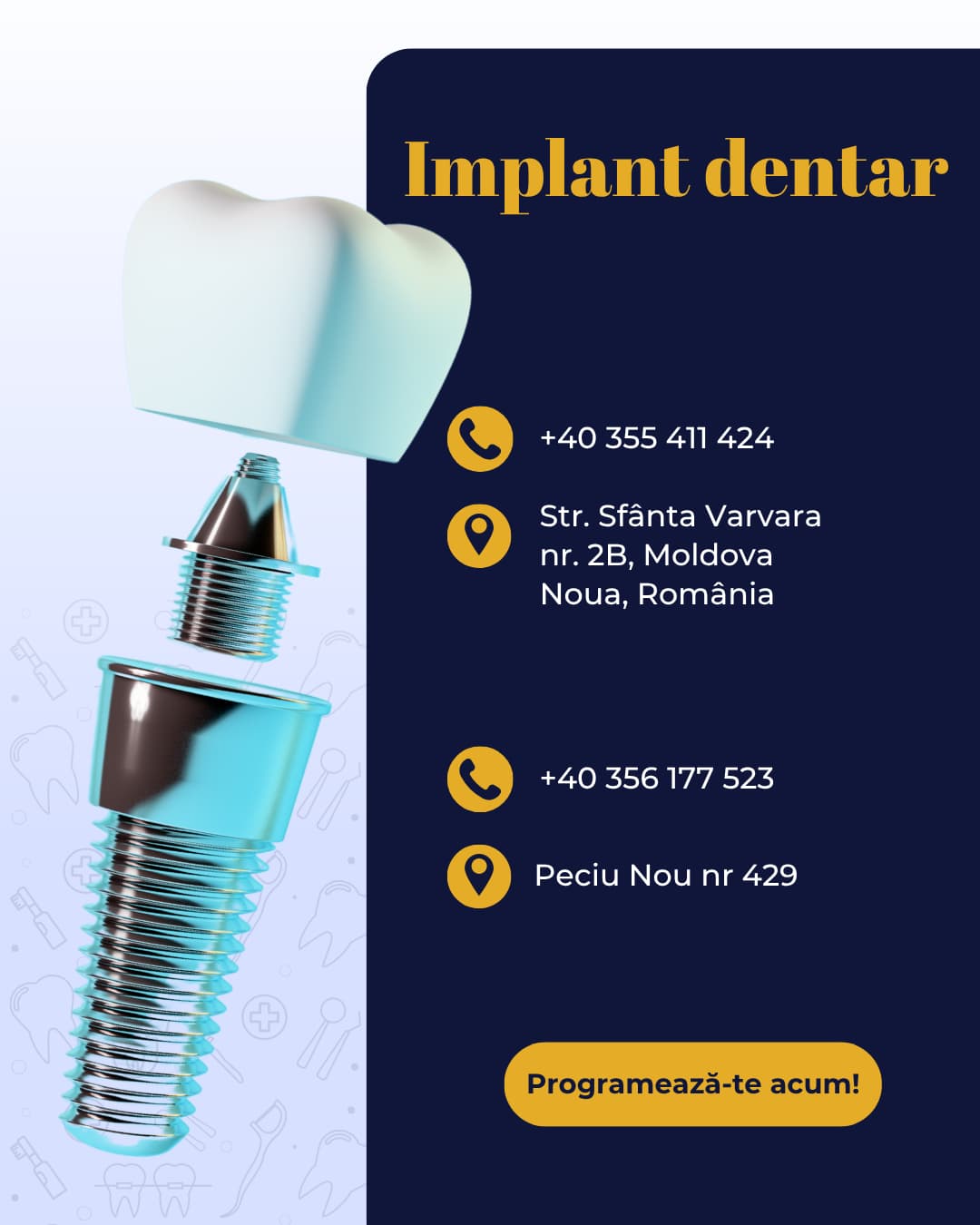
Dental implants are a method of replacing lost teeth, providing a durable and aesthetic solution. The procedure involves inserting a titanium screw into the jawbone, which will function as an artificial root for a replacement tooth (dental crown)..
Stages of dental implantology:
- 1. Initial consultation and treatment planning: In this stage, the dentist assesses the patient's general oral health and performs X-rays or CBCT to assess the quantity and quality of the jawbone.
- 2. Implant insertion: This is the actual surgical stage, in which the titanium implant is inserted into the jawbone. The procedure is performed under local anesthesia or, in some cases, under sedation.
- 3. Healing and osseointegration: After the implant is inserted, it must integrate into the bone, a process called osseointegration. This process takes between 3 and 6 months, during which the bone fuses with the implant, providing a stable base for the dental restoration.
- 4. Dental Crown Application: After osseointegration is complete, the dentist will place a dental crown on the implant. This can be cemented or screwed in and will function and look like a natural tooth.
Dental implants have a high success rate and offer numerous benefits, including restoring full functionality of the oral cavity, improving aesthetics, and preventing bone resorption that occurs after tooth loss.
Periodontal Surgery
Periodontal surgery is indicated in advanced cases of periodontal disease (such as periodontitis) that cannot be managed by conservative methods, such as scaling or antibiotic treatments.
There are several types of periodontal surgery:
- 1. Curettage and flaps: This is a procedure that removes infected gum tissue and cleans the roots of the teeth of bacteria and tartar. The surgeon will create an incision in the gum (flap), clean the affected area, and reposition the gum to a healthy position.
- 2. Bone regeneration: In cases of severe bone loss due to periodontal disease, periodontal surgery may include bone regeneration procedures. This involves placing biocompatible materials, such as membranes, synthetic bone, or donor bone, to stimulate the regeneration of lost bone tissue around the tooth roots.
- 3. Gum grafts: If the gums have receded significantly due to periodontal disease, exposing the roots of the teeth, surgery may involve gum tissue grafts. These are taken either from the roof of the mouth (palate) or from an external source and are placed in the affected area to cover exposed roots and prevent further tooth loss.
- 4. Coronal lengthening: This is a surgical procedure that removes some of the gum tissue, and sometimes some of the bone, to expose more of the surface of a tooth. It is often used before the placement of a dental crown or for cosmetic purposes to correct a “gingival” smile.
Periodontal surgery aims to restore gum health and prevent tooth loss in advanced cases of periodontal disease. After such an intervention, it is essential that the patient follow a strict oral hygiene routine and come for periodic check-ups to monitor the evolution of gum health.
Orthognathic surgery
Orthognathic surgery is a complex branch of dental surgery that involves correcting occlusions (bites) and jaw deformities that cannot be resolved through orthodontic treatments alone. This procedure is recommended for patients with severe malocclusion, such as prognathism (protruding lower jaw) or retrognathism (retracted lower jaw), which affects not only mastication, but also facial aesthetics.
Stages of orthognathic surgery:
In severe cases of malocclusions or jaw development problems that cannot be corrected with orthodontic appliances alone, orthognathic surgery may be necessary. This procedure involves surgically repositioning the jaws to correct occlusion problems and restore facial balance.
Orthognathic surgery is indicated in cases of:
- 1. Pre-surgical planning: Before surgery, the patient must undergo orthodontic treatment to align the teeth as best as possible. This treatment can last between 12 and 18 months and is essential for the success of the surgical procedure.
- 2. Surgery: Orthognathic surgery involves repositioning the upper jaw, the lower jaw, or both, to correct the malocclusion and restore the correct functionality of the bite. The surgery is performed under anesthesia general and may involve cutting and repositioning the jaw bones. After repositioning, the bones are secured with titanium screws and plates.
- 3. Post-surgical recovery: The recovery period varies from patient to patient, but generally lasts between 6 and 12 weeks. During this period, the patient will need to follow a special diet and avoid strenuous physical activities. Orthodontic treatment may continue after the procedure to complete the alignment of the teeth.
Orthognathic surgery not only improves the functionality of the bite, but can also bring significant aesthetic benefits, correcting facial disproportions and providing the patient with a balanced facial profile.
Apicectomy
Apicectomy is a surgical procedure that involves removing the tip of the root of a tooth and the infected tissue around it. This procedure is usually necessary when a root canal treatment has failed to completely eliminate the infection or when endodontic retreatment is not a viable option.
Apicectomy steps:
- 1. Accessing the root of the tooth: The surgeon makes an incision in the gum to expose the bone and root of the affected tooth.
- 2. Removing the root tip and infected tissue: The doctor removes approximately 3-4 mm of the root tip and cleans out the infected or damaged tissue around the root.
- 3. Sealing the root: After removing the affected tissue, the doctor will seal the root tip with a biocompatible material, such as MTA (Mineral Trioxide Aggregate), to prevent reinfection.
- 4. Closing the incision: After the area is cleaned and sealed, the surgeon will close the incision with sutures, and the patient will need to undergo postoperative treatment to ensure proper healing.
Apicectomy is indicated in cases where the periapical infection cannot be treated by other methods, such as conventional endodontic treatments or root canal retreatment. This procedure offers a viable alternative to tooth extraction, allowing the patient to keep their tooth long-term.
Bone augmentation and sinus lift
When the jawbone is insufficient to support a dental implant, bone augmentation surgery becomes necessary. There are several techniques used to increase bone volume and provide a solid foundation for implants.
- 1. Bone graft: If a patient does not have enough bone to support an implant, the doctor may perform a bone graft, either by taking bone from another part of the body or using biocompatible synthetic materials. This will stimulate the growth of natural bone and provide a solid foundation for the dental implant.
- 2. Sinus lift: A sinus lift is a surgical procedure used when there is insufficient bone volume in the upper jaw, especially in the molar and premolars area. It involves lifting the sinus membrane and adding a bone graft to increase the height of the jawbone. Once the bone has integrated and healed (usually between 6 and 9 months), the dental implant can be inserted.
Orthodontic Expansion and Repositioning Surgery
In cases of severe malocclusion or very crowded teeth, the orthodontist may recommend surgical interventions to facilitate the correct alignment of the teeth. These interventions are often performed in collaboration with orthodontists and include:
- ● Jaw expansion: This is a surgical procedure used to widen the upper jaw in cases of severe dental crowding or malocclusion. After the procedure, the patient undergoes orthodontic treatment to align the teeth correctly.
- ● Repositioning impacted teeth: Sometimes, teeth that have not erupted correctly can be surgically repositioned to facilitate orthodontic treatment. This procedure involves exposing impacted teeth and applying orthodontic appliances to guide them into the correct position.
Dental surgery plays a vital role in maintaining oral health and treating complex dental problems that cannot be managed through traditional methods. Whether it is tooth extractions, dental implants, or more complex surgical procedures, dental surgery aims to save teeth, correct jaw deformities, and improve the functionality and aesthetics of the smile.
With advances in dentistry and the use of modern technologies, most dental surgeries today are minimally invasive and effective, ensuring a quick recovery and minimal discomfort for patients. The success of dental surgical treatments depends largely on a correct assessment, an accurate diagnosis and interdisciplinary collaboration when necessary.
Postoperative care is essential to ensure optimal healing after any dental surgery. Patients must strictly follow the dentist's instructions, including avoiding hard foods, careful brushing around the operated area and adhering to a schedule of periodic check-ups to monitor the progress of healing.
Dental surgery is not just about removing teeth or correcting acute problems, but plays a fundamental role in long-term oral rehabilitation, allowing patients to regain full dental functionality, smile confidence and, ultimately, quality of life.
Whether it is complex extractions, orthognathic surgery or bone regeneration procedures for dental implants, dental surgeries are personalized according to the needs of each patient. With the right approach and the support of advanced technologies, modern dental surgery makes excellent results possible, offering patients lasting and effective solutions to their dental problems.
Frequently Asked Questions (FAQ) about Dental Surgery
-
How painful is dental surgery?
Pain during dental surgery is minimal, as the procedures are performed under local or general anesthesia, depending on the complexity of the case. After the operation, it is normal to feel some discomfort and pain, which can be managed with painkillers prescribed by your doctor. Your surgeon will provide detailed instructions to minimize post-operative discomfort and ensure a speedy recovery.
-
How long does it take to recover from dental surgery?
Recovery time varies depending on the type and complexity of the surgery. For simple tooth extractions, recovery may take a few days, while for more complex procedures such as dental implants or orthognathic surgery, full recovery may take several weeks to several months. Following your doctor's post-operative instructions is essential for proper and speedy healing.
-
What should I avoid after dental surgery?
After dental surgery, it is important to avoid hard, crunchy or hot foods that can irritate the operated area. Also, avoid smoking or drinking alcohol, as these can delay healing. Strenuous physical activities should be avoided in the first few days after surgery to prevent bleeding and complications. Your doctor will give you specific recommendations on diet and activities to avoid during the postoperative period.
-
Are follow-up visits necessary after surgery?
Yes, follow-up visits are essential to monitor healing and ensure that no postoperative complications occur. During these visits, the surgeon will check the operated area, remove any sutures, and assess the progress of healing. It is important to follow the appointments recommended by your doctor to ensure a complete and smooth recovery.
-
What can I do to prevent the need for dental surgery?
Maintaining good oral hygiene is essential to prevent dental conditions that may require surgery. Brush your teeth at least twice a day, floss daily, and visit your dentist regularly for checkups and professional cleanings. Avoiding bad habits like smoking and excessive sugar consumption can also reduce your risk of serious dental problems.
-
What happens if I don't follow my post-operative instructions?
Failure to follow your post-operative instructions can lead to complications such as infection, prolonged bleeding, persistent pain, and delayed healing. It is essential to follow all of your surgeon's instructions to ensure proper recovery and to avoid complications that may require further procedures.
-
Can I work or do normal activities after dental surgery?
Most patients can return to normal activities within a few days after simple dental surgeries. However, for more Complex procedures, such as dental implants or orthognathic surgery, may require a longer recovery period. Your surgeon will provide you with specific recommendations regarding recovery time and when you can resume normal activities, including work.